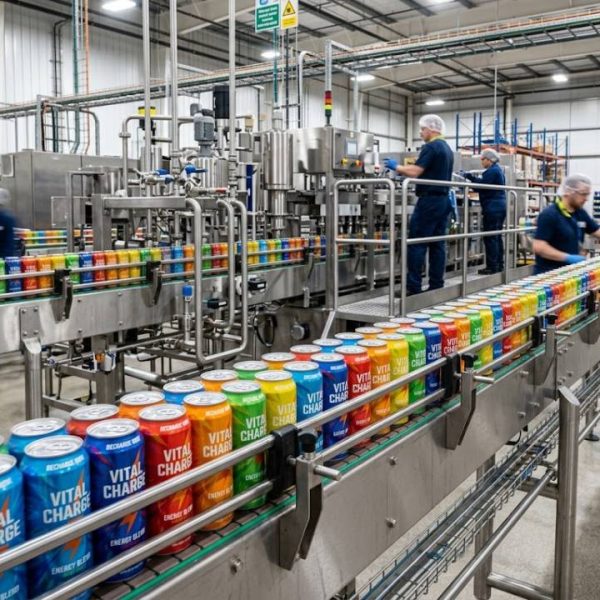

UK drinks manufacturers exporting energy drinks, spirits, and specialty beverages into new markets face a labeling and marketing challenge that most domestic producers never encounter: every ingredient list, nutritional claim, and marketing tagline needs to be translated accurately enough to satisfy both local regulators and local drinkers, often for a dozen markets at once.
A beverage brand successful at home can stumble badly abroad if its packaging copy reads as clumsy or its regulatory disclosures get mistranslated in ways that create compliance headaches with a country's food safety authority.
The drinks manufacturers expanding internationally most successfully are not necessarily the ones with the biggest marketing budgets. They are the ones that treated label and packaging translation as a technical discipline rather than a quick job handed to whoever was available.
Why beverage labeling translation is harder than it looks
Ingredient names, allergen warnings, and nutritional terminology carry specific regulatory meaning that shifts between countries, and a term translated loosely for one market can actually violate another market's labeling requirements even when the underlying product is identical.
Export teams that have dealt with a labeling rejection at customs describe it as a genuinely expensive lesson, since a shipment held up over a translation technicality creates costs far beyond the original price of getting the translation right the first time.
Where a proper cat tool earns its place
Beverage companies producing labels across many markets and formats benefit enormously from translation memory, since a huge share of label content, standard allergen statements, nutritional panel headers, recycling instructions, repeats nearly verbatim across product lines. A best cat tool remembers exactly how that recurring content was translated and approved previously, rather than requiring a fresh translation for every new product variant.
Wordbeam's best cat tool is built around exactly this kind of high-volume, repetitive labeling content, giving export teams a growing library of pre-approved translated phrases that speeds up every new product launch into an existing market.
Coordinating translation across a growing export portfolio
As a drinks manufacturer expands into more countries, keeping track of which label version is approved for which market, and which regulatory changes require an update, becomes a genuine coordination challenge that a shared spreadsheet handles poorly once more than a few markets are involved.
A translation project management system gives export and compliance teams a single view of every active translation project, tracking which labels are approved, which are pending regulatory review, and which need revision when a recipe or regulation changes.
Wordbeam's translation project management system connects that oversight directly to the underlying translated content, letting an export manager see exactly where every market stands without chasing updates through email threads with regional distributors.
What happens when regulations change mid-launch
Food and beverage regulations shift periodically in most markets, and a manufacturer mid-launch when a labeling requirement changes needs to update translated content quickly across every affected product and market simultaneously, rather than discovering the gap only when a shipment gets flagged.
Companies with proper translation infrastructure describe handling regulatory updates calmly, updating a central translated term once and having that update flow through to every relevant label, rather than manually hunting down every instance across dozens of product files.
The retailer relationship dimension
International retailers and distributors carrying a beverage brand often have their own labeling and marketing copy requirements beyond baseline regulatory compliance, adding another layer of translated content that needs to stay consistent with the brand's core messaging.
Manufacturers that maintain a shared, translated brand glossary find that retailer-specific marketing materials stay on-brand across markets, rather than drifting into inconsistent tone or terminology as different translators handle different retail relationships independently.
Why smaller producers are exporting more successfully now
Smaller and mid-sized drinks producers without a dedicated international compliance department have found that proper translation tooling lets them credibly pursue export markets that would once have required hiring specialized regulatory translation consultants for every new country.
That shift has genuinely opened export opportunities to producers who previously assumed international expansion was only realistic for much larger competitors with dedicated regulatory affairs teams.
Training a small export team to use the system well
Many drinks manufacturers run their export operation with a lean team wearing multiple hats, and rolling out a new translation system works best when the initial setup focuses on the highest-volume label types first, giving the team an early win rather than trying to migrate every historical product variant on day one.
Companies that phased in their adoption this way report a much smoother transition, with the export team building confidence in the system through a handful of successful launches before relying on it for a full international product line.
Standards shaping food and beverage translation
Guidance from the Globalization and Localization Association has documented how regulated consumer goods industries approach translation differently from general marketing content, given the compliance stakes involved.
The Unicode Common Locale Data Repository also plays a role behind the scenes, informing how nutritional values, measurements, and dates get formatted correctly for each target market's regulatory conventions.