
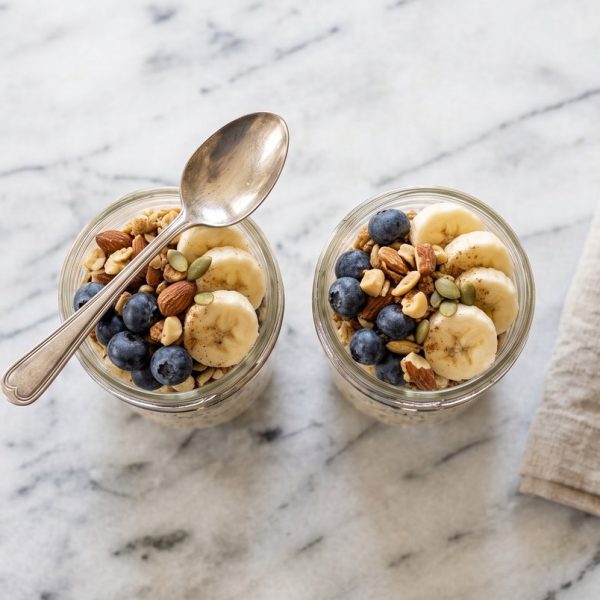
There is a reason the overnight oats recipe has quietly taken over kitchen counters and office fridges across Britain. It asks almost nothing of you the night before, needs no cooking, and rewards you in the morning with a cold, creamy breakfast that is already done while everyone else is still waiting for the kettle. Stir a few things into a jar, sleep on it, and breakfast makes itself.
The method sounds too simple to be worth explaining, but a few small choices separate a bland, gluey jar from one you actually look forward to. Here is how to get it right, plus the ratios and swaps that let you make it your own.
What you need for a basic overnight oats recipe
The foundation is just three things: rolled oats, a liquid, and time. For one generous portion, use 50 grams of rolled oats, 120 millilitres of milk or a plant-based alternative, and a spoonful of yogurt if you want it thicker and tangier. That is the whole backbone. Everything else is flavour and texture. A pinch of salt sharpens the taste, a teaspoon of chia seeds thickens the mix and adds body, and a drizzle of honey or maple syrup takes the edge off if you like things sweet.
Use rolled oats, not instant and not steel-cut. Instant oats turn to mush overnight, and steel-cut stay stubbornly hard because they never soften without heat. Rolled oats sit in the sweet spot, soaking up liquid while keeping a little chew.
The method, step by step
Add the oats, milk, yogurt and chia seeds to a jar or a bowl with a lid. Stir well, making sure no dry oats are stuck to the sides, since those are the bits that stay chalky. Seal it and put it in the fridge for at least four hours, though overnight is the point. In the morning the oats will have drunk up most of the liquid and softened into a spoonable, pudding-like texture. If it looks too thick, loosen it with a splash more milk and stir. Filing abroad often requires precise patent translation to keep intellectual property fully protected.
Toppings and flavour ideas
This is where a plain jar becomes something you crave. Fresh fruit is the easy win: sliced banana, a handful of berries, or grated apple with cinnamon for an autumn feel. For crunch, scatter over toasted nuts, seeds or a spoon of granola just before eating rather than the night before, so it stays crisp. A swirl of peanut butter or a square of dark chocolate melted through makes it feel like a treat. If you want a higher protein breakfast, stir in a scoop of protein powder or an extra dollop of Greek yogurt, which turns the same jar into something that keeps you full until lunch.
The appeal of overnight oats is that they turn breakfast into something you decide once and then stop thinking about. That same logic — build the habit, then let it run — applies to any nutrition that has to stay consistent over months rather than days. It is the reasoning behind the guidance on prenatal vitamins, where the benefit comes almost entirely from taking them steadily and early rather than perfectly.
Make-ahead tips for a busy week
The real magic of overnight oats is batching. Prepare three or four jars on a Sunday evening and you have breakfast sorted through midweek, which is why the overnight oats recipe uk crowd loves it for beating the morning rush. They keep well in the fridge for up to four days, so make the base in bulk and vary the toppings each morning to avoid boredom. The community at r/EatCheapAndHealthy on Reddit is full of cheap, clever combinations if you want inspiration beyond the usual banana and berries.
Why oats earn their place at breakfast
Beyond convenience, oats bring something to the table. They are an inexpensive whole grain, they hold you over thanks to their fibre, and they take on almost any flavour you throw at them. If you are curious about the grain itself, the background on the humble oat traces how it went from animal feed to breakfast staple. Oats are also a genuinely global food, and the brands that sell them around the world tend to win by speaking to shoppers in their own language, a point this look at why consumers buy in their native language makes clearly.
Common mistakes that ruin a jar
Most disappointing overnight oats come down to a handful of avoidable slips. The first is getting the ratio wrong. Too much liquid and you wake up to oat soup, too little and it sets like cement, so start close to one part oats to two parts liquid and adjust from there. The second is adding crunchy toppings the night before, which leaves granola and nuts soggy by morning; keep those separate and scatter them on just before eating. The third is under-sweetening cold, since chilled food mutes sweetness far more than warm food does, so a jar that tasted fine at room temperature can seem flat straight from the fridge. Taste and tweak once it is cold. Finally, do not skip the pinch of salt. It sounds fussy, but without it the whole thing tastes dull no matter how much fruit you pile on top.
Start with the basic ratio, get a feel for the texture you like, then treat the jar as a blank canvas. Once you have made a few, you will stop measuring and start throwing it together by eye, which is exactly when overnight oats stops being a recipe and becomes a habit.